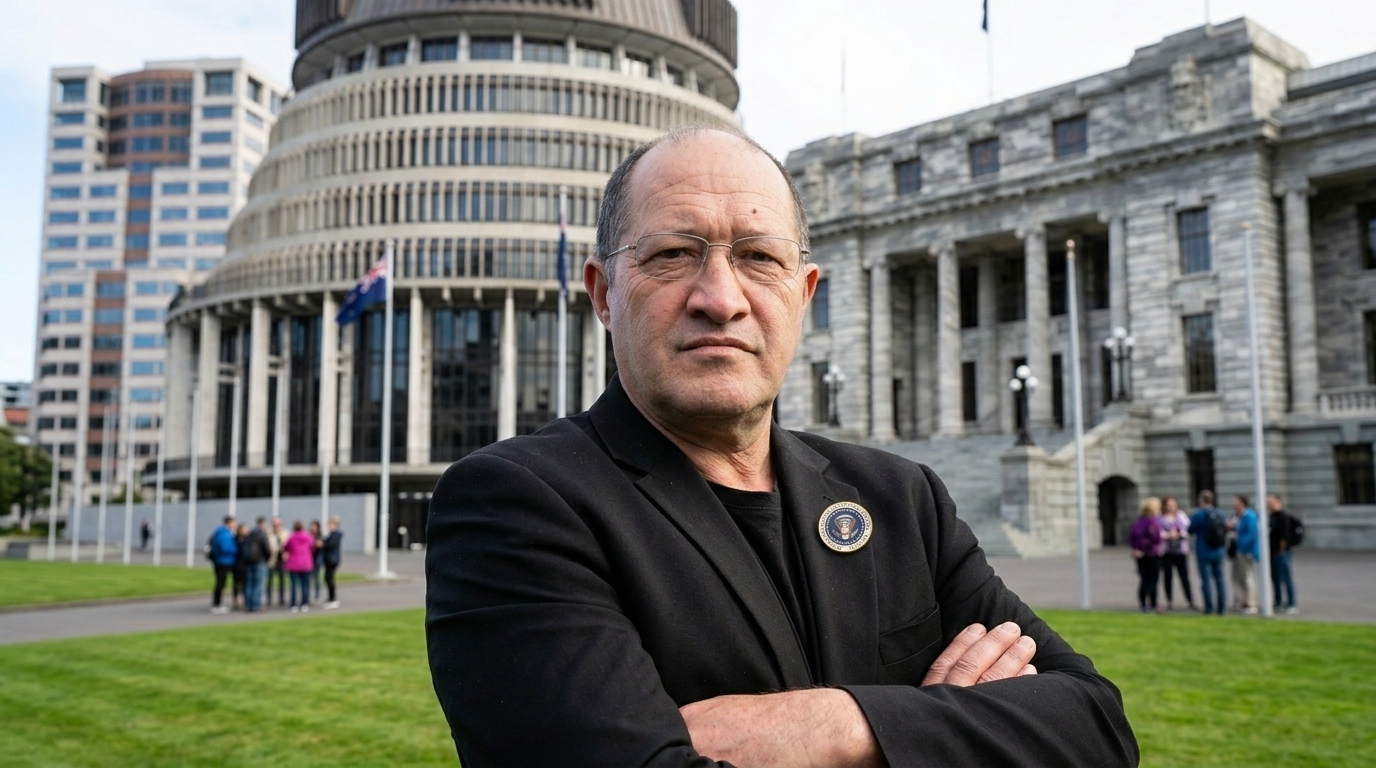
Weekly video commentary on New Zealand politics. Heavy on context, light on outrage, allergic to spin. We read the 400-page report so you can keep pretending you did.
This is what Counterspun is going to be: weekly video commentary on New Zealand politics, heavy on context, light on outrage. Watch the trailer, judge us accordingly, and subscribe so the first episode finds you.
Middle School West Auckland and South Auckland Middle School couldn't reliably pay staff, but both kept up hundreds of thousands a year in curriculum and management fees. Commissioners now run both.
The Government's target was 140,000 people or fewer on Jobseeker Support by 2030. The number is currently 218,500 and climbing, which officials have classified as a target 'at risk'.
Christopher Luxon says Kiwis returning from Australia are up 14 percent and departures are down, proof the migration picture has turned a corner. The net loss for the year was still 28,500 people.
The Green Party's KiwiMart would spend $2.8 billion buying 120 supermarkets to break the duopoly. Asked what shoppers would actually save, Chlöe Swarbrick said politicians shouldn't set prices.
Winston Peters once said political appointees to diplomatic posts should be the absolute exception. He has now made one, and it is his own former chief of staff, bound for Stockholm.
MBIE officials were found to have given Parliament untruthful and incomplete answers during a select committee hearing. Parliament's Clerk confirms the available punishments top out at a stern word.
Written explainers and context pieces for when fourteen minutes of video wasn't enough rope.
Counterspun Media is an independent, one-desk operation covering New Zealand politics on video, from Aotearoa, on a weekly schedule the news cycle has so far declined to respect. There is no newsroom, no panel of six people talking over a host, and no mystery funders. There is a camera, a desk, and a reading pile that does not observe weekends.
The method is not complicated. We read the reports, the bills and the transcripts, then say what is actually in them, calmly, with sources cited on screen. Where we editorialise, we label it. Where we get something wrong, we say so in public and leave the correction up. In the current media environment this apparently qualifies as a radical publishing model.
We are not affiliated with any political party, and after this much Question Time, increasingly unaffiliated with the concept of political parties.